SQL CROSS JOIN vs INNER JOIN

SQL CROSS JOIN vs INNER JOIN

Choosing between SQL CROSS JOIN vs INNER JOIN operations isn’t just a matter of syntactic preference; it completely changes how the relational database engine reads data from your storage disks, utilizes memory, and builds execution plans. Let’s break down the mechanics, behavioral profiles, and optimization strategies required to use these joins effectively at scale. SQL … Read more
SQL CROSS JOIN

SQL CROSS JOIN

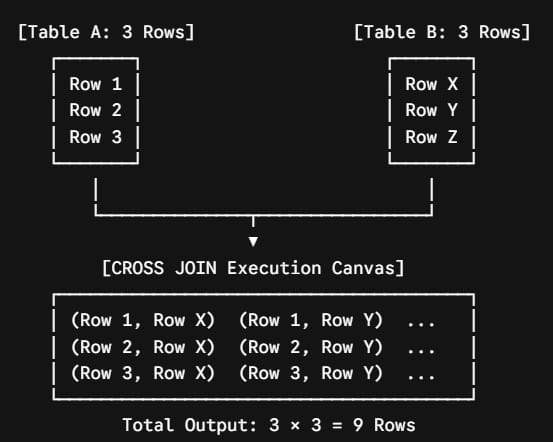
Whether you are building reporting grids, seeding data warehouses, or creating permutation matrices, understanding how the SQL query engine processes a cross join is essential for writing high-performance, enterprise-grade queries. Let’s walk through the mechanics, risks, and optimization strategies for mastering SQL CROSS JOIN. SQL CROSS JOIN Defining the Core Engine Mechanics To understand a … Read more

SQL Join Basics

SQL Join Basics

Understanding SQL joins is the bridge between writing basic data-retrieval scripts and mastering advanced data analysis. In this guide, I will walk you through the fundamental mechanics of SQL joins, analyze the different varieties available, and establish best practices for query performance. SQL Join Basics What Is an SQL JOIN? At its core, an SQL … Read more

SQL Constraints

SQL Constraints

In this comprehensive tutorial, I am going to walk you through everything you need to know about SQL constraints. We will explore what they are, why they are non-negotiable for high-authority system architectures, and the deep technical behaviors of the six primary constraint types. SQL Constraints What are SQL Constraints? In relational database management systems … Read more

SQL Aliases

SQL Aliases

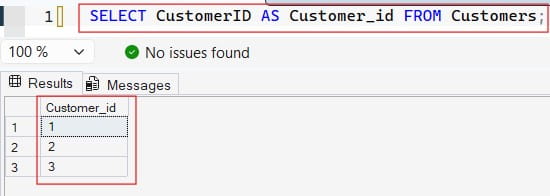
This tutorial offers a comprehensive analysis of SQL aliases, covering column-level renaming, table-level abstraction, underlying execution paths, and crucial optimization principles. SQL Aliases What is an SQL Alias? At its foundation, an SQL alias is a temporary name assigned to a table or column within the context of a single query execution. It is vital … Read more

Primary Key

Primary Key

In this complete guide, I will share the foundational concepts, design archetypes, and professional best practices you need to master primary key design. Primary Key What is a Primary Key? The Foundation of Relational Databases At its absolute core, a primary key is a column—or a unique combination of columns—whose values unambiguously identify every individual … Read more

Primary Key vs Unique Key

Primary Key vs Unique Key

In this comprehensive tutorial, I will clarify the distinctions between these two critical constraints, Primary Key vs Unique Key, explain their underlying mechanics, and share the architectural rules of thumb I use to determine exactly when to apply each. Primary Key vs Unique Key The Core Concept of Uniqueness Constraints Before contrasting these keys, it … Read more

Get Primary Key Of Table SQL Server

Get Primary Key Of Table SQL Server

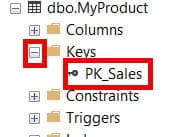
Whether you are troubleshooting a slow-running query, knowing how to get the primary key of a table in SQL Server is a non-negotiable skill. Today, I will discuss how I navigate system catalogs and metadata to find these keys. Get Primary Key Of Table SQL Server If you’re a developer or a DBA, you need … Read more

SQL Subquery

SQL Subquery

In this comprehensive technical guide, I will break down the structural mechanics of SQL subquery, unpack their distinct functional classifications, compare them to standard alternative patterns, and establish clear guidelines for query performance optimization. SQL Subquery What Is an SQL Subquery? An SQL subquery—often referred to as an inner query or nested query—is a standard … Read more

SQL SELF JOIN Tutorial

SQL SELF JOIN Tutorial

In this comprehensive tutorial, I will explain the SQL SELF JOIN from the ground up. I will show you exactly how this mechanism functions, when to deploy it, and how to optimize it for maximum query performance. SQL SELF JOIN Tutorial What is an SQL SELF JOIN? An Architectural Overview Before writing code, we need … Read more