SQL Server Table Naming Conventions

SQL Server Table Naming Conventions

Mastering SQL Server table naming conventions is more than just a preference; it’s a foundational skill for building scalable, professional enterprise systems. In this article, I will share the exact standards I use to ensure database schemas are self-documenting, efficient, and clean. SQL Server Table Naming Conventions Why Naming Conventions Matter In the fast-paced world … Read more
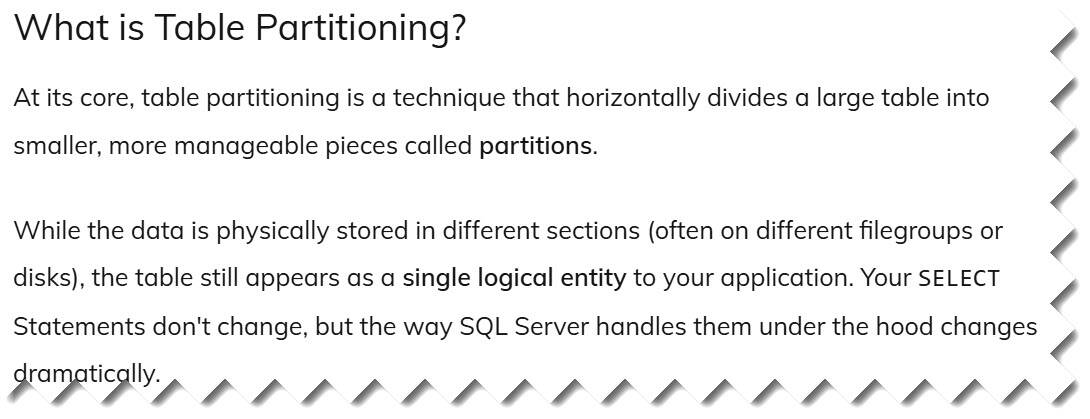
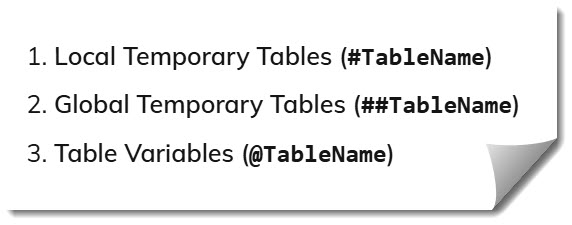
Table Partition In SQL Server Step By Step

Table Partition In SQL Server Step By Step

In this article, I’ll walk you through everything you need to know about SQL Server table partitioning—from the “why” to the “how”—using a step-by-step approach that I’ve used in production environments across the United States. Table Partition In SQL Server Step By Step What is Table Partitioning? At its core, table partitioning is a technique … Read more

SQL Server Temp Table Scope

SQL Server Temp Table Scope

The difference between a single hash (#) and a double hash (##), or the choice to use a table variable (@), isn’t just syntax—it’s a fundamental decision about data visibility and lifespan. In this article, I’m going to break down the scope of SQL Server temporary objects so you never have to guess whether your … Read more

SQL Server Table Name Length Limit

sql server table name length limit

In this article, I’m going to walk you through everything you need to know about the SQL Server table name length limit. We will cover the standard limits, the “hidden” limits for temporary tables that often catch developers off guard, and the best practices recommended for keeping your schema manageable. SQL Server Table Name Length … Read more

How to Check If CDC Is Enabled on a Table in SQL Server

How to Check If CDC Is Enabled on a Table in SQL Server

In this article, I will walk you through the exact methods I use to verify CDC status on a table in SQL Server. I’ll cover everything from simple T-SQL queries to checking system stored procedures, ensuring you have the full picture. How to Check If CDC Is Enabled on a Table in SQL Server Prerequisites … Read more

Table Backup in SQL Server

Table Backup in SQL Server

In this article, I am going to walk you through exactly how to “back up” a table, ensuring you have a safety net before anyone touches your production data. Table Backup in SQL Server Understanding the Architecture Before we dive into the “How-To,” we need to establish the “Why.” Why doesn’t Microsoft provide a simple … Read more

SQL Server Import Data from CSV into Existing Table

SQL Server Import Data from CSV into Existing Table

If you are looking to master how to SQL Server import data from CSV into an existing table, you are in the right place. In this article, I will walk you through the most robust, efficient, and professional methods to get that data where it belongs: inside your database. I’ll cover everything from the visual … Read more

Cannot Obtain The Required Interface

Cannot Obtain The Required Interface

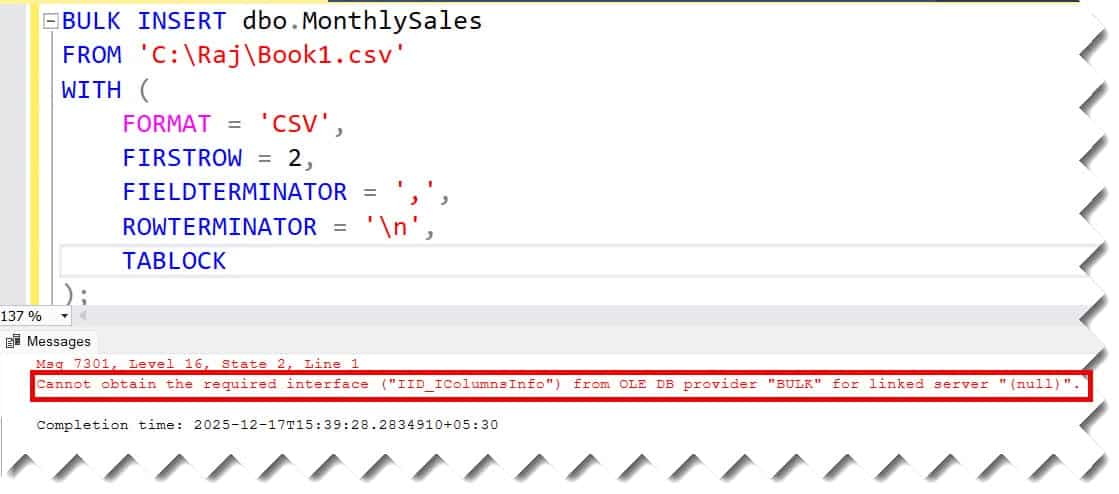
Recently, I was working on the script to import our sales data into one of my existing tables from a CSV file. Immediately after executing the script I got the error “Cannot obtain the required interface (“IID_IColumnsInfo”) from OLE DB provider “BULK” for linked server “(null)”.” Cannot Obtain The Required Interface I was trying to … Read more

Truncate Table In SQL Server

Truncate Table In SQL Server

In this deep-dive tutorial, I will walk you through everything you need to know about the TRUNCATE TABLE statement in SQL Server. We will cover how it works under the hood, how it differs from DELETE, and the specific permissions and limitations you need to be aware of to manage your data infrastructure effectively. Truncate … Read more

SQL Server Add Primary Key To Existing Table

SQL Server Add Primary Key To Existing Table

This tutorial guides you through the complete process of adding a primary key to an existing table using T-SQL and SQL Server Management Studio (SSMS), tailored for a professional development environment. SQL Server Add Primary Key To Existing Table Whether you inherited a “heap” (a table without a clustered index) or simply forgot to define … Read more